
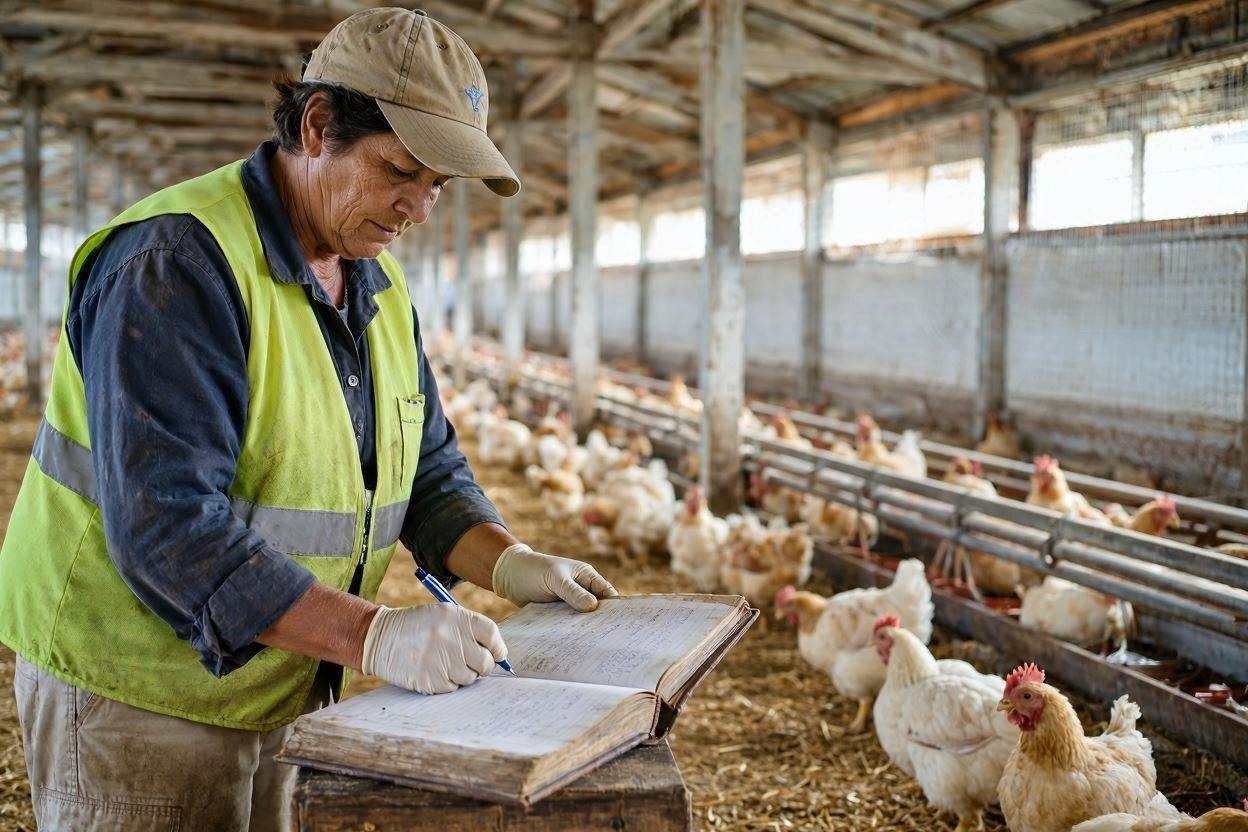
For decades, paper sign-in books have been a familiar sight at poultry farms across Australia.
Whether located in a site office, biosecurity entry point or reception area, these visitor registers have provided a simple way to record who entered a property and when.
For many smaller operations, they continue to serve an important purpose.
However, as commercial poultry businesses become larger, more geographically dispersed and subject to increasingly rigorous biosecurity and compliance requirements, paper-based systems are beginning to show their limitations.
Today’s poultry businesses need more than a list of names written in a visitor book. They need accurate, searchable records that support biosecurity, compliance, investigations and day-to-day operational management.
Digital workforce tracking is helping many organisations achieve exactly that.
Why Accurate Records Matter
Good record keeping has always been an important part of poultry farm biosecurity.
Knowing who has entered a property, where they have been and when they were there provides valuable information for routine operations and becomes even more important during a disease investigation.
Accurate records also support:
- Internal biosecurity procedures
- Site access control
- Contractor management
- Regulatory compliance
- Operational planning
- Workplace health and safety
- Audit preparation
As poultry businesses grow, maintaining these records consistently across multiple sites becomes increasingly challenging.
The Limitations of Paper Sign-In Books
Paper registers are simple, inexpensive and familiar.
However, they were designed for a time when businesses operated fewer sites and workforce movements were easier to manage.
Modern poultry operations often involve employees, contractors, veterinarians and service providers travelling between multiple farms every day.
In these environments, paper systems can create several operational challenges.
Handwriting Can Be Difficult to Read
One of the most common frustrations with paper visitor books is handwriting.
Names, times and company details may be difficult to interpret, particularly when entries are completed quickly during busy periods.
If records are needed weeks or months later, identifying individuals can become unnecessarily difficult.
Information Is Often Incomplete
- Paper forms rely entirely on the person completing them.
- Fields may be skipped.
- Arrival or departure times may be omitted.
- Previous site visits may not be recorded.
- Important information can be forgotten or entered inconsistently.
- Incomplete records reduce their usefulness during audits or investigations.
Information Is Stored at Individual Sites
Every poultry farm typically maintains its own visitor register.
While this makes sense operationally, it also means information is spread across multiple locations.
If management needs to understand where a particular contractor has worked over the past fortnight, they may need to review records from several different properties.
This process can be slow and labour intensive.
Searching Historical Records Takes Time
Imagine trying to answer questions such as:
- Who visited Farm 7 during the second week of March?
- Which contractors entered breeder facilities last month?
- How many external visitors attended each production site this quarter?
With paper records, these questions often require someone to manually search through archived sign-in books.
Digital systems can usually provide the same information within seconds.
Paper Records Are Difficult to Analyse
Paper records are excellent for storing information.
They are far less useful for identifying trends.
For example, management may wish to understand:
- Which farms receive the highest number of contractor visits?
- How often are staff moving between production sites?
- Which facilities experience the greatest visitor traffic?
- Are site access procedures being followed consistently?
Answering these questions from paper records is difficult and often impractical.
Digital systems make this type of reporting routine.
Why Speed Matters During Investigations
Biosecurity incidents are rare, but when they occur, timely access to information is essential.
If an investigation requires management to identify everyone who visited a particular site, every hour spent searching paper records delays the response.
Being able to quickly determine:
- Who entered a site
- When they arrived
- When they departed
- Which other locations they visited
can significantly improve the speed and accuracy of internal investigations.
Even outside disease events, the same information is valuable when responding to workplace incidents, contractor enquiries or compliance audits.
The Advantages of Digital Biosecurity Records
Digital workforce management systems do much more than replace a paper register.
They provide organisations with timely, accurate and searchable information that supports day-to-day operations.
Better Audit Preparation
Many poultry businesses undergo internal and external audits covering biosecurity, workplace health and safety, quality systems and operational procedures.
Digital records make it easier to demonstrate compliance by providing accurate historical records that can be accessed quickly when required.
Faster Investigations
Instead of manually reviewing multiple visitor books, management can search historical records electronically.
This reduces administration time and allows staff to focus on managing the situation rather than locating paperwork.
Improved Compliance
Digital systems encourage more consistent record keeping by standardising the information collected at each site.
This helps organisations maintain complete records and reduces the risk of missing or inconsistent data.
Better Management Reporting
One of the greatest advantages of digital records is the ability to analyse workforce movements across the entire business.
Management can identify trends, review contractor activity, monitor workforce distribution and gain insights that are simply not practical with paper records.
Increased Operational Efficiency
Removing manual record keeping reduces administrative workload while improving access to information for authorised personnel.
Staff spend less time searching for records and more time managing operations.
Digital Records Support Better Poultry Workforce Management
Technology should support people, not replace them.
Good poultry workforce management still depends on trained employees, well-designed procedures and a strong organisational culture.
Digital systems simply provide better information.
Managers gain greater visibility of workforce activity across multiple sites and can make informed decisions based on accurate records rather than assumptions.
For organisations operating numerous poultry facilities, this visibility becomes increasingly valuable as operations grow.
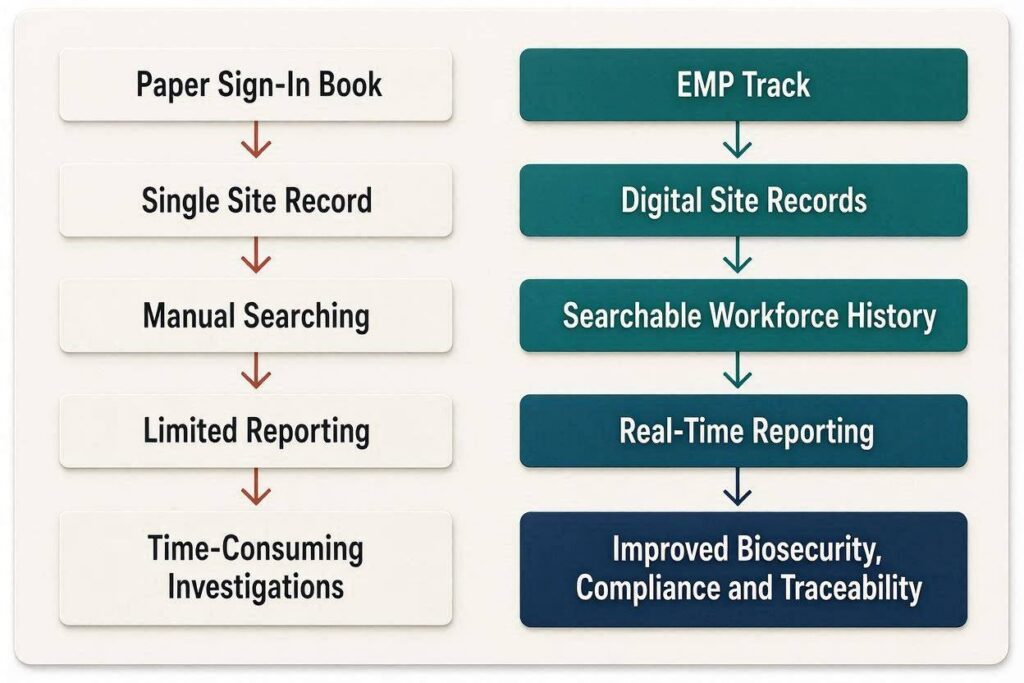
A Practical Example: Digital Workforce Tracking with EMP Track
One large commercial poultry producer in Queensland recognised that maintaining accurate workforce records across multiple production sites was becoming increasingly difficult using traditional paper-based processes.
Employees and contractors regularly travelled between sites with different quarantine classifications, making workforce traceability an important component of the organisation’s broader biosecurity program.
To improve visibility, the business implemented EMP Track, a digital workforce tracking solution developed by Deltonic Pty Ltd t/a ValuTronics.
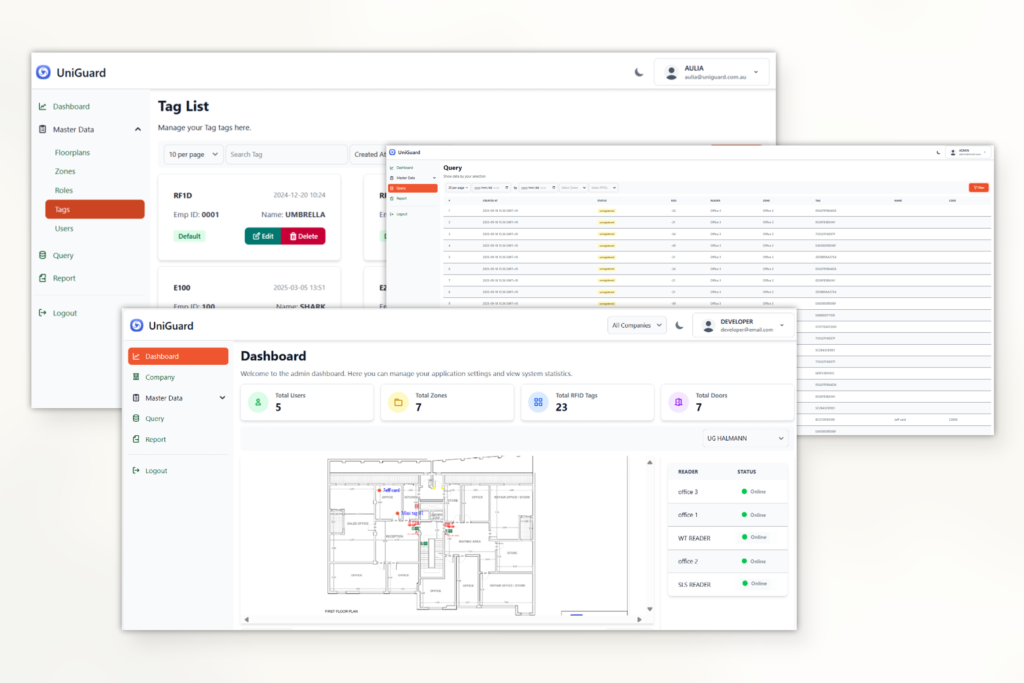
EMP Track records when authorised personnel enter and leave each site, creating a secure digital audit trail of workforce movements.
Rather than searching through multiple paper visitor books, authorised managers can quickly review historical records, confirm site attendance and understand workforce movements across the organisation.
This information supports existing biosecurity procedures by providing accurate movement records that complement staff training, site access protocols and quarantine zone management.
The result is improved traceability, stronger compliance monitoring and more efficient access to workforce information whenever it is needed.
Looking to the Future
Paper visitor books have served the poultry industry well for many years and continue to have a place in some operations.
However, as poultry businesses become larger and biosecurity expectations continue to evolve, many organisations are recognising the benefits of digital workforce management.
Better records support better decisions.
Whether preparing for an audit, reviewing workforce movements, responding to an operational issue or strengthening biosecurity procedures, having accurate and accessible information allows managers to respond with greater confidence.
For commercial poultry businesses operating multiple sites, digital workforce tracking is becoming an increasingly valuable tool for improving compliance, operational efficiency and workforce traceability.