
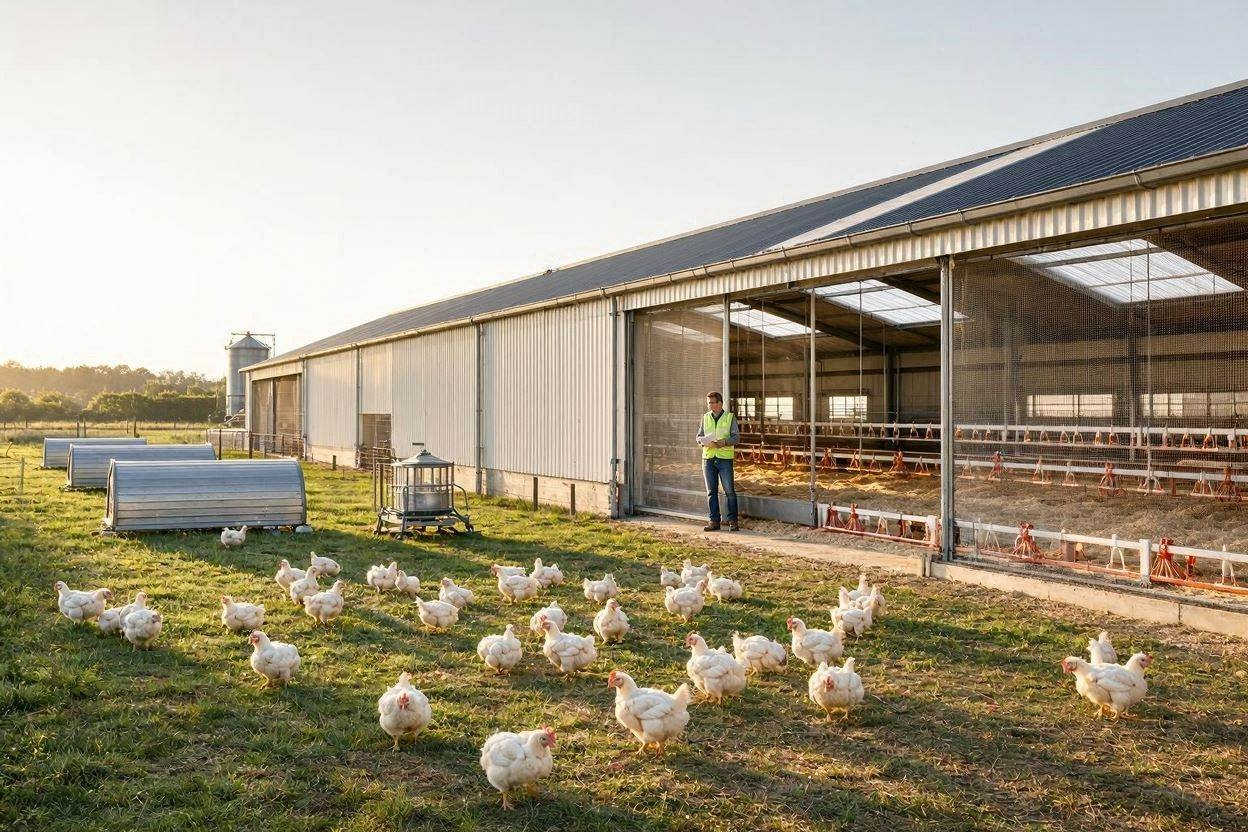
At a Glance
- Industry: Commercial Poultry Production
- Location: Queensland, Australia
- Solution: EMP Track Workforce Tracking System
- Application: Workforce movement tracking across multiple poultry production sites
- Focus: Supporting poultry biosecurity through improved workforce visibility and digital movement records
Background
Australia’s commercial poultry industry operates under some of the world’s highest biosecurity standards.
For producers managing multiple farms, maintaining those standards involves far more than controlling vehicles and disinfecting equipment. It also requires understanding how people move throughout the operation.
This case study examines how one large Queensland poultry producer strengthened an existing biosecurity program by improving visibility of workforce movements across multiple production sites.
The project demonstrates how digital workforce tracking can complement established biosecurity procedures by providing accurate, searchable records of employee and contractor movements.
The Operation
The customer operates a large commercial poultry business across Queensland, managing multiple production facilities that include poultry sheds, support infrastructure and operational sites.
- More than 100 poultry sheds
- 20 production sites
- Around 400 employees and contractors
- Staff travelling between multiple locations each day
- Sites operating under different quarantine classifications
Like many growing poultry businesses, the organisation had invested heavily in biosecurity procedures, staff training and operational controls.
However, increasing operational complexity highlighted an opportunity to improve how workforce movements were recorded and monitored.
The Challenge
Managing a modern poultry operation involves many different people.
- Production staff.
- Maintenance technicians.
- Veterinarians.
- Managers.
- Contractors.
- Cleaning teams.
- Specialist service providers.
Many of these employees legitimately travel between multiple farms during a normal working day.
Although site access procedures were already well established, management wanted better visibility of these workforce movements.
Specifically, they wanted to answer questions such as:
- Who is currently on each site?
- Which locations has a worker visited today?
- When did they arrive and depart?
- Have movement protocols between quarantine zones been followed?
- Can workforce movements be reviewed quickly if required?
Answering these questions using traditional paper-based systems became increasingly time-consuming as the business expanded.
The organisation recognised that improving workforce traceability could strengthen existing biosecurity procedures while reducing administrative effort.
The Existing Process
Prior to implementing EMP Track, site attendance was primarily recorded using traditional sign-in processes.
These records provided valuable information but presented several practical limitations across a large multi-site operation.
Management found that workforce information was:
- Stored across multiple locations.
- Difficult to search.
- Time-consuming to consolidate.
- Less useful for understanding movement between sites.
- Challenging to analyse across the entire business.
Importantly, the organisation was not looking to replace its existing biosecurity procedures.
Instead, it wanted better information to support them.
The Solution
Working with ValuTronics, the poultry producer implemented EMP Track, a digital workforce tracking solution designed to record workforce movements across multiple sites.
EMP Track records:
- Site entry times.
- Site departure times.
- Workforce location history.
- Historical movement records.
- Movement between sites with different quarantine classifications.
The implementation was designed to integrate with existing operational procedures rather than requiring significant process changes.
Staff continued following established biosecurity protocols while management gained improved visibility of workforce movements.
Supporting Existing Biosecurity Procedures
One of the project’s primary objectives was to strengthen, not replace, the organisation’s existing biosecurity framework.
The system enables authorised personnel to review workforce movements across the operation, helping confirm that movement between different quarantine zones aligns with established procedures.
For example, management can review:
- Which employees attended each site.
- Historical movement patterns.
- The sequence of site visits throughout the day.
- Workforce attendance across multiple production facilities.
This information supports existing quarantine management procedures while providing an accurate digital audit trail.
The Results
Following implementation, the organisation gained significantly greater visibility of workforce activity across its poultry operations.
Key outcomes included:
- Improved Workforce Traceability: Management can quickly identify where authorised workers have been and when they attended each location.
- Better Operational Visibility: Real-time workforce information provides greater confidence when coordinating staff across multiple production sites.
- Stronger Biosecurity Support: Digital movement records help support existing quarantine procedures by improving visibility of movements between sites with different biosecurity classifications.
- Faster Access to Historical Records: Searching workforce history now takes minutes rather than manually reviewing multiple paper records.
- Improved Audit Readiness: Digital records provide a consistent audit trail that supports compliance activities and internal reviews.
Measurable Outcomes
Every poultry operation is different, so measurable benefits will vary between organisations.
Significant Metrics:
- Number of poultry sites monitored: 34
- Reduction in manual administration: 75-90%
- Time required to locate historical records reduced from 2 days to less than 1 hour
Lessons Learned
Several important lessons emerged during the project.
- Technology Works Best Alongside Existing Procedures: The success of the implementation came from supporting established biosecurity practices rather than replacing them.
- Visibility Improves Decision Making: Having accurate information about workforce movements allows managers to make better operational decisions with greater confidence.
- Digital Records Save Time: Administrative effort associated with searching historical records was significantly reduced.
- Staff Adoption Is Critical: The effectiveness of any workforce management system depends on consistent use by employees and contractors.
Training and communication played an important role in achieving successful implementation.
Looking Ahead
As Australia’s poultry industry continues to strengthen its preparedness against evolving biosecurity risks, understanding workforce movements is becoming an increasingly valuable part of commercial poultry management.
For this Queensland producer, digital workforce tracking has become another layer within an already comprehensive biosecurity strategy.
The project demonstrates that technology does not replace good biosecurity.
Instead, it provides better information to support the people, procedures and management practices that already protect Australia’s commercial poultry industry.
About EMP Track
EMP Track is a workforce tracking and site access management solution developed by ValuTronics.
It records authorised personnel movements across multiple sites, providing accurate digital audit trails, workforce visibility and operational reporting.
Within the commercial poultry industry, EMP Track supports biosecurity by helping organisations maintain accurate records of workforce movements between sites with different quarantine classifications while complementing existing access control and biosecurity procedures.
Please contact us if you would like to know more about EMP Track.