
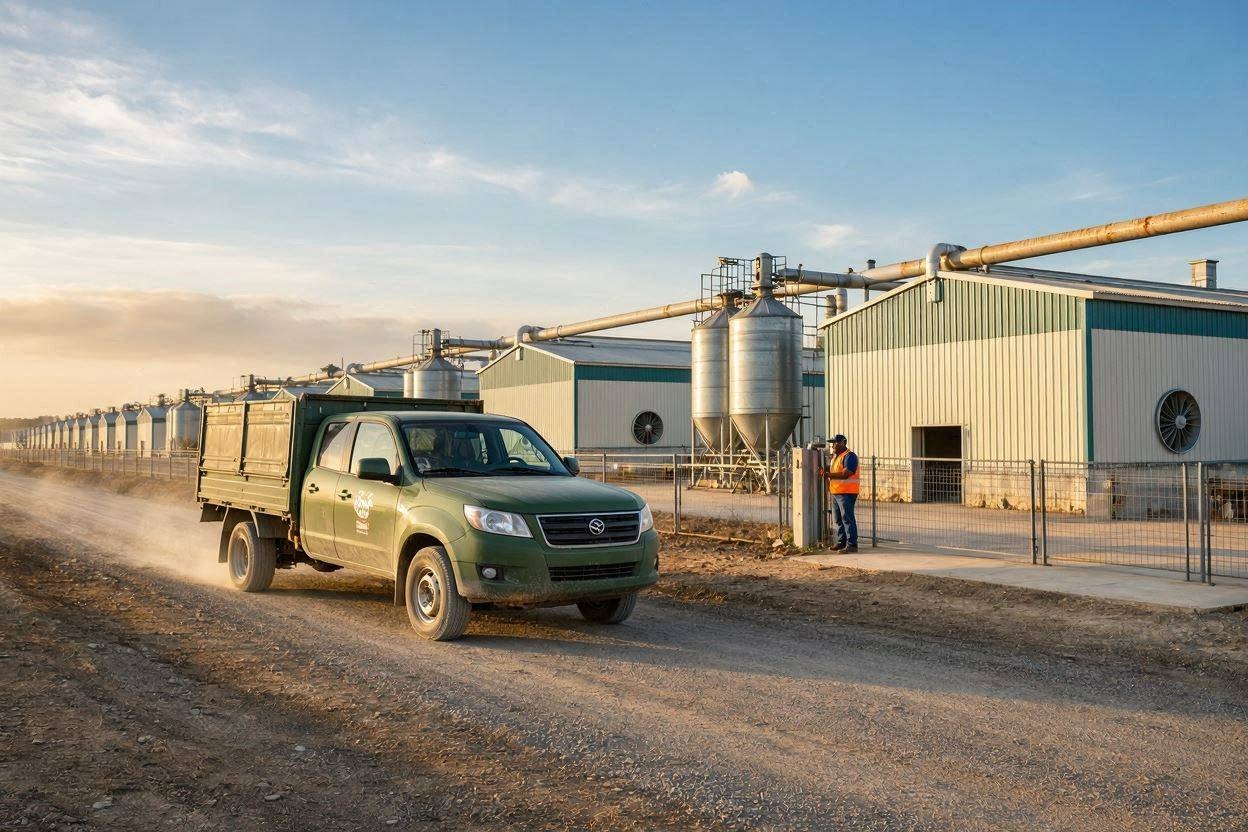
When poultry producers think about biosecurity, attention naturally turns to the obvious risks.
- Vehicles entering the property.
- Equipment moving between sheds.
- Wild birds.
- Rodents.
- Visitors arriving from outside the business.
These are all important considerations and form the foundation of a strong biosecurity program.
However, one of the most significant, and often underestimated, biosecurity risks is much closer to home.
It’s the movement of people.
Every day, employees, contractors, veterinarians, maintenance technicians and managers move between poultry sheds, production areas and, in many cases, multiple farms. While these movements are essential for keeping operations running efficiently, they also present opportunities for diseases and contaminants to be transferred if appropriate biosecurity procedures are not followed.
As poultry businesses continue to strengthen their biosecurity in response to evolving disease threats such as Highly Pathogenic Avian Influenza (HPAI), understanding and managing workforce movement is becoming an increasingly important part of protecting commercial operations.
Biosecurity Isn’t Just About Direct Contact
Many diseases are spread through direct contact between infected and healthy birds.
However, contamination can also occur indirectly.
This is known as indirect transmission, and it happens when infectious material is carried from one location to another on items such as:
- Boots and footwear
- Clothing and protective equipment
- Tools and machinery
- Vehicles
- Feed delivery equipment
- Mobile devices
- Hands and gloves
- Equipment cases and toolboxes
People themselves are not always the source of disease, but they can unintentionally transport contaminated material between locations if biosecurity procedures are not followed consistently.
This is why movement controls form an important part of modern poultry farm biosecurity.
Every Site Visit Adds Another Layer of Risk
Large commercial poultry businesses rarely operate from a single location.
Many organisations manage:
- Multiple broiler farms
- Breeder farms
- Hatcheries
- Feed mills
- Egg production facilities
- Maintenance workshops
- Administration offices
Staff often travel between these locations throughout the day.
For example:
- An area manager visits four farms during routine inspections.
- A maintenance technician repairs equipment at several sites.
- Contractors perform scheduled servicing across multiple properties.
- Veterinarians inspect flocks at different production facilities.
Each movement is entirely legitimate.
The challenge is ensuring those movements occur in the correct order and in accordance with established biosecurity procedures.
Without visibility of workforce movements, organisations can find it difficult to verify whether those procedures have been followed consistently.
Why Quarantine Zones Matter
Most commercial poultry businesses divide their operations into different biosecurity or quarantine zones.
These zones reflect varying levels of disease risk and help prevent contaminants from moving between areas.
Depending on the operation, different zones may require:
- Protective clothing
- Dedicated footwear
- Shower-in and shower-out procedures
- Equipment disinfection
- Restricted access
- Authorised personnel only
These controls are highly effective, but only if everyone follows them.
For example, if someone enters a high-risk production area before visiting another site without completing the required decontamination procedures, the effectiveness of those quarantine zones can be compromised.
Managing this across multiple farms and dozens or even hundreds of employees requires more than good intentions. It requires clear procedures, consistent training and accurate records.
Common Biosecurity Mistakes
Most biosecurity incidents are not caused by deliberate negligence.
They are more often the result of small oversights.
Examples include:
- Staff forgetting to sign visitor registers.
- Contractors attending several farms in one day without management knowing their movement history.
- Temporary workers being unfamiliar with site-specific biosecurity procedures.
- Paper records being incomplete or difficult to locate.
- Managers having limited visibility of where employees have already been during the day.
- Site access decisions being based on assumptions rather than verified information.
Individually, these may seem like minor issues. Collectively, they increase operational risk.
Why Traceability Matters
If a disease investigation becomes necessary, one of the first questions asked is often:
Who has been on the property?
Closely followed by:
Where else have they been?
The faster these questions can be answered, the faster management can assess potential exposure pathways and support appropriate response measures.
Good poultry farm traceability is not simply about identifying birds or production batches.
It also includes understanding the movement of people, contractors, vehicles and equipment throughout the operation.
Having accurate workforce movement records allows organisations to:
- Confirm who accessed each location.
- Review historical site visits.
- Understand movement patterns.
- Support internal investigations.
- Produce evidence during compliance audits.
- Demonstrate adherence to biosecurity procedures.
Accurate traceability strengthens confidence in the organisation’s overall biosecurity program.
Why Paper Sign-In Books Are Reaching Their Limits
For decades, paper visitor books have served poultry producers well.
They remain a familiar and inexpensive way to record attendance.
However, as operations become larger and more complex, paper systems have several limitations.
Information may be:
- Difficult to read.
- Incomplete.
- Stored at individual locations.
- Time-consuming to retrieve.
- Impossible to analyse across multiple sites.
Imagine trying to determine every farm visited by a contractor over the previous two weeks using only paper sign-in books located across twenty different properties.
The information exists but finding it can take hours.
Digital systems significantly improve access to this information while creating a consistent record that can be searched and reported whenever required.
Supporting Better Poultry Workforce Management
Managing workforce movement isn’t about restricting employees from doing their jobs.
It’s about giving managers better information to support good operational decisions.
Modern poultry workforce management increasingly relies on digital systems that help organisations understand:
- Who is currently on site.
- When personnel entered and exited.
- Which locations were visited.
- Historical movement patterns.
- Compliance with site access procedures.
This information supports existing biosecurity programs by making workforce movements more visible and easier to review.
A Practical Example
One large commercial poultry producer in Queensland recognised that workforce movement across multiple farms had become increasingly difficult to monitor using traditional methods.
Employees, contractors and operational staff regularly travelled between sites with different quarantine classifications, making accurate movement records an important component of the organisation’s broader biosecurity strategy.
To improve visibility, the business implemented EMP Track, a digital workforce tracking solution developed by Deltonic Pty Ltd t/a ValuTronics.
EMP Track records when authorised workers enter and leave each site, creating a searchable history of workforce movements across the operation.
Importantly, the system helps management monitor movement between locations with different quarantine levels, supporting existing biosecurity procedures and reducing the likelihood of personnel inadvertently moving from higher-risk areas into lower-risk production sites without following established protocols.
Rather than replacing established biosecurity practices, the technology provides an additional layer of operational visibility that complements staff training, site procedures and access controls.
Looking Ahead
As Australia’s poultry industry continues to strengthen its preparedness against emerging disease threats, effective biosecurity will depend on many interconnected measures working together.
Managing the movement of people deserves the same attention as managing vehicles, equipment and visitors.
Understanding where employees and contractors have been, maintaining accurate records and ensuring compliance with quarantine procedures all contribute to a stronger and more resilient biosecurity program.
For poultry producers operating multiple sites, improving workforce visibility is becoming an increasingly valuable part of modern poultry farm biosecurity.
Technology alone cannot prevent disease, but when combined with well-designed procedures, staff training and a strong biosecurity culture, it can provide the information organisations need to make better decisions and respond more effectively when every minute counts.