
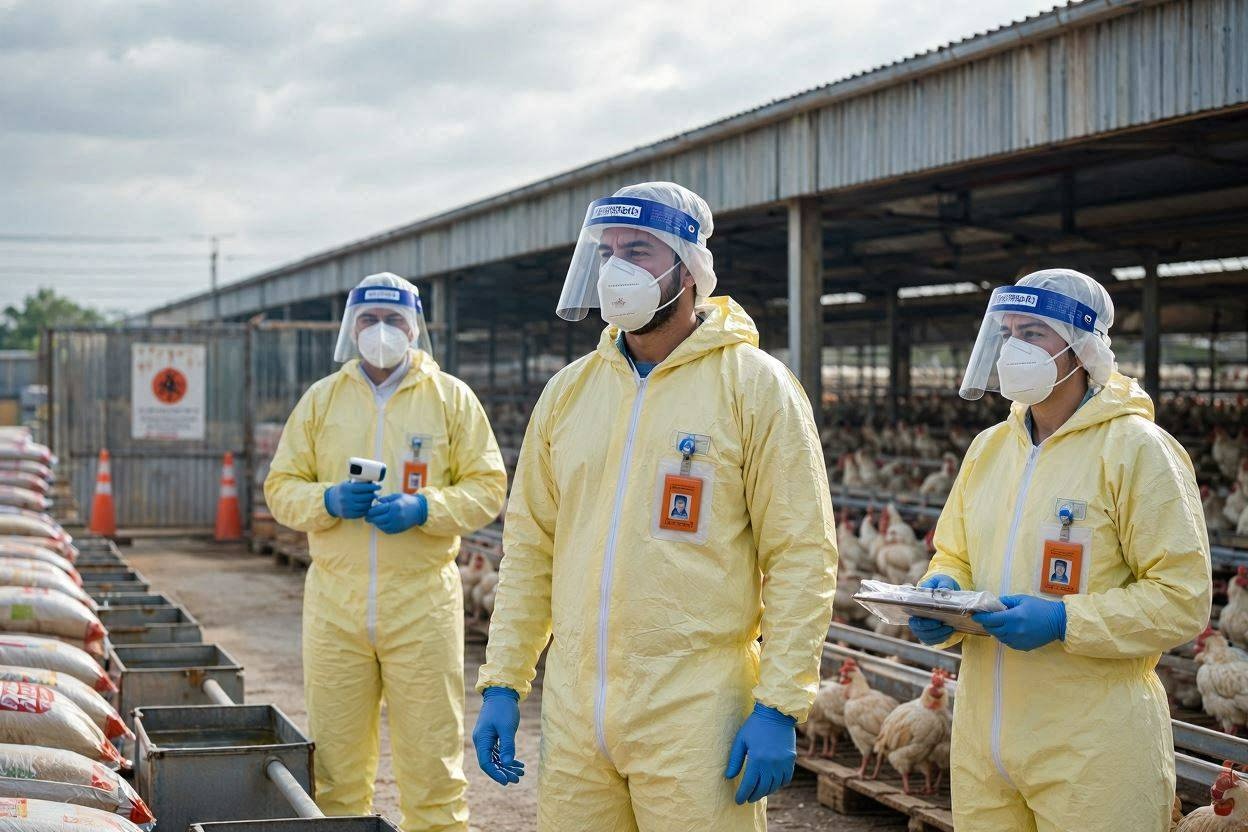
Australia’s commercial poultry industry has long been recognised for its commitment to strong biosecurity practices.
As disease risks continue to evolve, producers are increasingly looking beyond traditional biosecurity measures and exploring how technology can support existing procedures.
It’s important to recognise that technology does not replace good biosecurity.
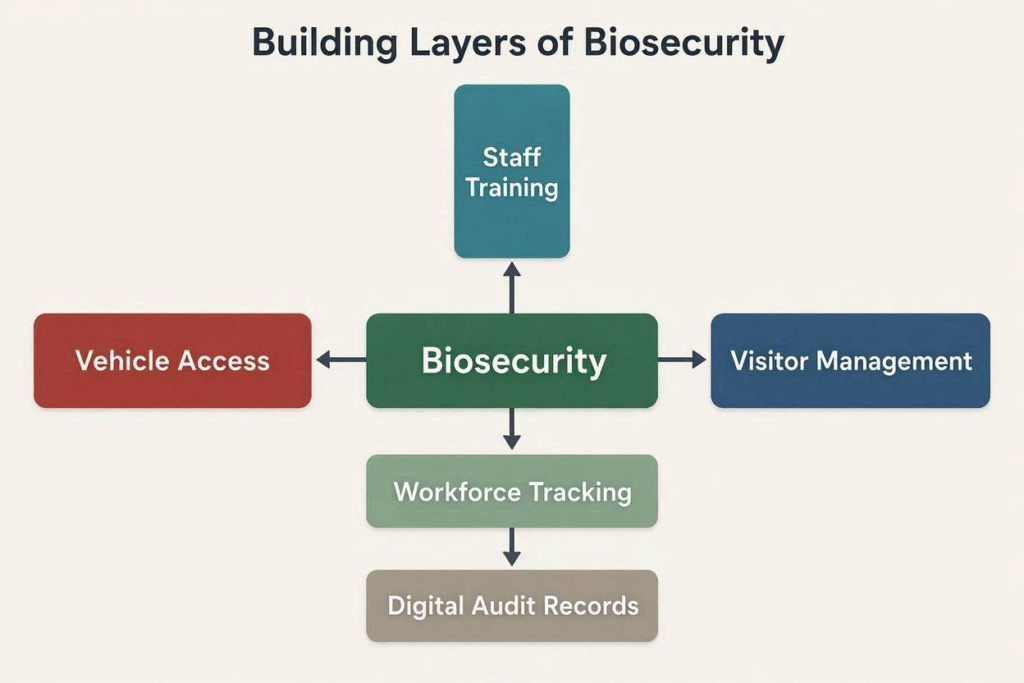
Staff training, well-designed procedures, controlled access and a strong workplace culture remain the foundation of every successful poultry operation.
What technology can do is provide better information, improve visibility and reduce the administrative burden associated with managing large, complex operations.
For businesses operating multiple poultry farms, hatcheries or production facilities, digital tools are becoming an increasingly valuable part of day-to-day biosecurity management.
Here are five practical ways technology is helping commercial poultry producers strengthen their biosecurity programs.
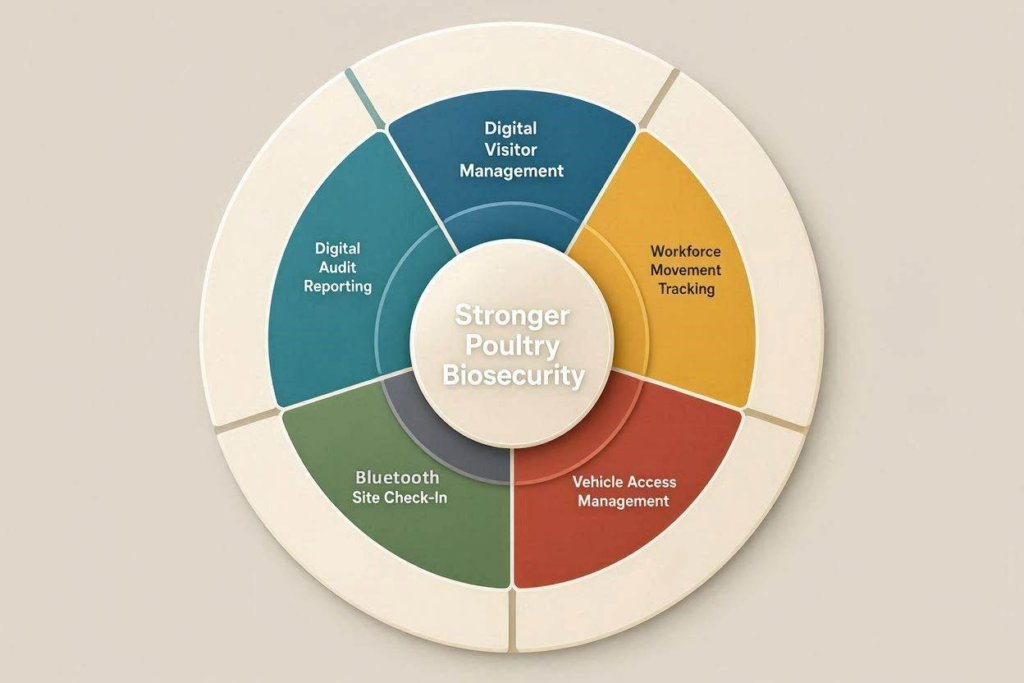
1. Digital Visitor Management
Every visitor entering a poultry property represents a potential biosecurity risk.
Contractors, veterinarians, maintenance personnel, delivery drivers and consultants all play important roles in the operation of a modern poultry business. At the same time, each visit needs to be managed carefully to reduce the risk of introducing disease.
Traditionally, visitor details have been recorded in paper sign-in books.
While these systems remain familiar, digital visitor management provides several advantages:
- Consistent information collection.
- Accurate arrival and departure times.
- Searchable visitor history.
- Centralised records across multiple sites.
- Improved visibility for management.
Digital visitor management also makes it easier to review historical site access during audits or investigations.
Rather than searching through individual visitor books, authorised personnel can quickly retrieve the information they need.
2. Workforce Movement Tracking
One of the most overlooked aspects of poultry biosecurity is the movement of employees and contractors between sites.
Large poultry operations often involve staff travelling between multiple farms, breeder facilities, hatcheries and support locations throughout the day.
Without accurate records, it can be difficult to answer important operational questions such as:
- Who is currently on site?
- Which farms has this worker visited today?
- Have quarantine procedures been followed?
- Can workforce movements be traced if required?
Digital workforce tracking provides organisations with greater visibility of these movements while supporting existing biosecurity procedures.
Rather than replacing established protocols, these systems provide accurate records that help management verify compliance and improve operational awareness.
3. Vehicle Access Management
Vehicles play an essential role in commercial poultry production.
Feed deliveries, maintenance vehicles, service contractors and operational staff all require access to production facilities.
Managing vehicle movements is an important component of any biosecurity program.
Technology can assist by recording:
- Vehicle entry and exit times.
- Driver identification.
- Delivery schedules.
- Approved access permissions.
- Historical movement records.
Combined with existing wash-down and disinfection procedures, digital vehicle access management helps create a more complete picture of site activity.
For businesses operating multiple farms, these records also support operational planning and compliance reporting.
4. Bluetooth Site Check-In
Bluetooth code technology has become a familiar part of everyday life, and many organisations are now using it to simplify workforce and visitor check-in processes.
Instead of completing paper forms, authorised personnel can check in using an access card or tag.
Benefits include:
- Faster site access.
- Reduced paperwork.
- More accurate records.
- Standardised information collection.
- Immediate availability of attendance records.
For poultry businesses managing numerous sites, Bluetooth check-in provides a simple way to improve record accuracy while reducing administrative effort.
It also encourages more consistent data collection across every facility.
5. Digital Audit Reporting
One of the greatest advantages of digital biosecurity systems is the ability to produce meaningful reports.
Good records are valuable.
Being able to analyse those records is even more valuable.
Digital reporting allows organisations to:
- Review historical workforce movements.
- Monitor visitor activity.
- Identify trends.
- Support internal audits.
- Demonstrate compliance.
- Produce information quickly during investigations.
Instead of manually searching paper files, management can access accurate reports within minutes.
This not only improves efficiency but also strengthens confidence in the organisation’s overall biosecurity program.
Technology Should Support Good Biosecurity, Not Replace It
One of the most common misconceptions about digital technology is that it replaces existing procedures.
In reality, successful implementations work the other way around.
- Technology supports people.
- It supports training.
- It supports established biosecurity protocols.
- It supports informed decision-making.
The strongest biosecurity programs combine experienced staff, clear procedures and accurate information.
Digital systems simply make that information easier to collect, manage and analyse.
A Practical Example
One large commercial poultry producer in Queensland recognised that maintaining visibility of workforce movements across multiple production sites was becoming increasingly challenging.
Employees and contractors regularly travelled between locations with different quarantine classifications, making accurate movement records an important part of the organisation’s broader biosecurity strategy.
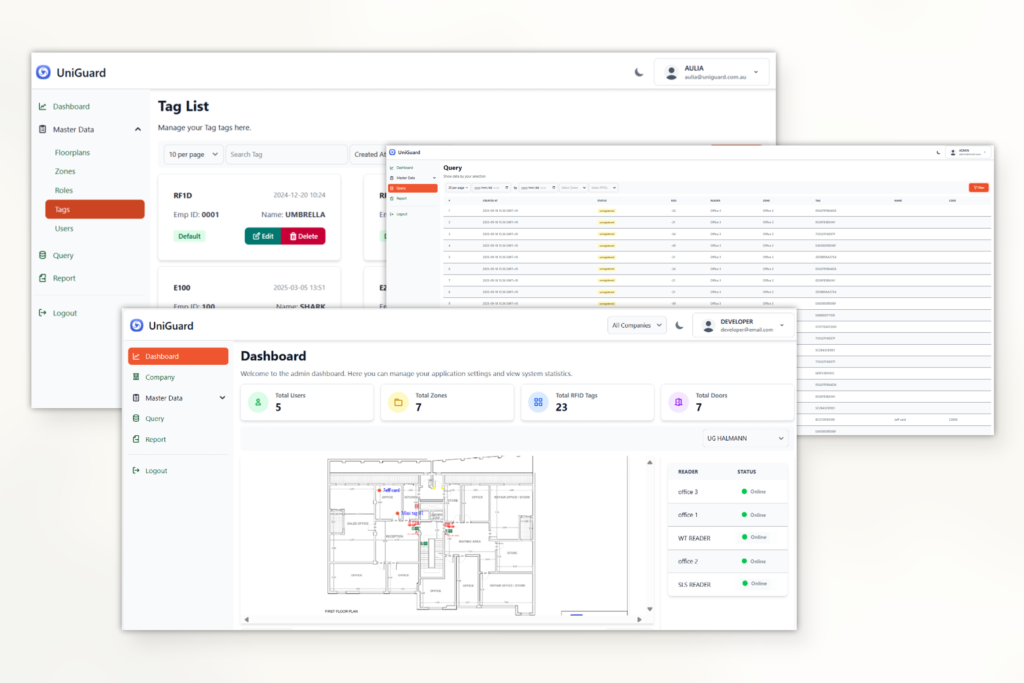
To strengthen this process, the business implemented EMP Track, a workforce tracking solution developed by Deltonic Pty Ltd t/a ValuTronics.
EMP Track records when authorised personnel enter and leave each site, creating a searchable digital history of workforce movements.
This information helps management understand where employees have been, supports existing quarantine procedures and provides a reliable digital audit trail for operational and compliance purposes.
Importantly, EMP Track was introduced as another layer within an already mature biosecurity program. It complements existing procedures rather than replacing them, giving managers greater visibility of workforce activity across multiple production sites.
Looking Ahead
The future of poultry biosecurity is unlikely to depend on any single technology.
Instead, successful organisations will continue building multiple layers of protection that work together to reduce risk and improve operational resilience.
Digital visitor management, workforce movement tracking, vehicle access management, Bluetooth check-in and digital reporting each contribute valuable information that supports day-to-day decision-making.
As Australia’s poultry industry continues to respond to evolving disease threats and increasing compliance expectations, technology will play an increasingly important role in helping producers manage complex operations while maintaining the high biosecurity standards for which the industry is recognised.
For commercial poultry businesses, the goal is not simply to collect more data. It is to have accurate, timely information that helps people make better decisions, protect livestock and maintain confidence in every aspect of their biosecurity program.
Related Articles
If you’re interested in learning more about workforce visibility and poultry biosecurity, you may also find these articles useful:
- Bird Flu Biosecurity in Australia: Why Managing People Movement Is Critical for Commercial Poultry Farms
- Why People Movement Is One of the Biggest Biosecurity Risks on Poultry Farms
- Paper Sign-In Books Are No Longer Enough for Modern Poultry Farms
- Case Study: Improving Biosecurity Through Workforce Visibility at a Queensland Poultry Operation
Together, these articles explore the practical challenges facing modern poultry businesses and examine how operational processes and technology can work together to strengthen commercial poultry biosecurity.
Interested in learning more about EMP Track? Contact us today.